
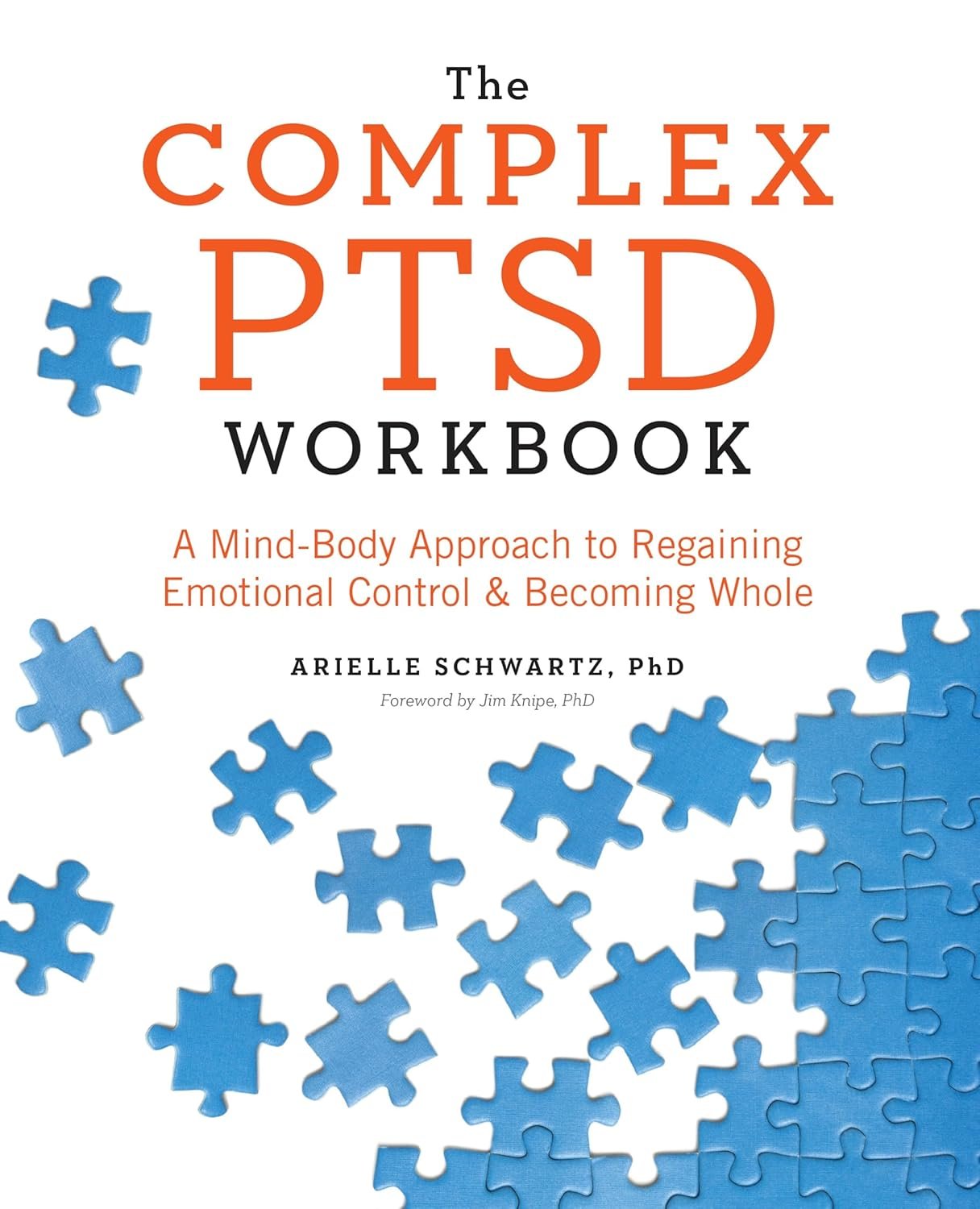
The Complex PTSD Workbook: A Mind-Body Approach to Regaining Emotional Control and Becoming Whole (Healing Complex PTSD)
$8.80
Related Products


A mind-body workbook for healing and overcoming Complex PTSD
Those affected by complex PTSD, or C-PTSD, commonly feel as though there is something fundamentally wrong with them―that somewhere inside there is a part of them that needs to be fixed. Facing one’s PTSD is a brave, courageous act―and with the right guidance, recovery is possible.
In The Complex PTSD Workbook, you’ll learn all about C-PTSD and gain valuable insight into the types of symptoms associated with unresolved childhood trauma. Take healing into your own hands while applying strategies to help integrate positive beliefs and behaviors.
Discover your path to recovery with:
Examples and exercises―Uncover your own instances of trauma with PTSD activities designed to teach you positive strategies.Expert guidance―Explore common PTSD diagnoses and common methods of PTSD therapy including somatic therapy, CBT, and mind-body perspectives.Prompts and reflections―Apply the strategies you’ve learned and identify PTSD symptoms with insightful writing prompts.
Find the tools you need to work through C-PTSD and regain emotional control with this mind-body workbook.
From the Publisher


Publisher : Callisto
Publication date : January 10, 2017
Edition : Workbook
Language : English
Print length : 190 pages
ISBN-10 : 1623158249
ISBN-13 : 978-1623158248
Item Weight : 1 pounds
Dimensions : 7.5 x 0.7 x 9.25 inches
Best Sellers Rank: #4,484 in Books (See Top 100 in Books) #11 in Post-Traumatic Stress #13 in Medical Psychology Pathologies #28 in Popular Psychology Pathologies
Customer Reviews: 4.7 4.7 out of 5 stars (6,683) var dpAcrHasRegisteredArcLinkClickAction; P.when(‘A’, ‘ready’).execute(function(A) { if (dpAcrHasRegisteredArcLinkClickAction !== true) { dpAcrHasRegisteredArcLinkClickAction = true; A.declarative( ‘acrLink-click-metrics’, ‘click’, { “allowLinkDefault”: true }, function (event) { if (window.ue) { ue.count(“acrLinkClickCount”, (ue.count(“acrLinkClickCount”) || 0) + 1); } } ); } }); P.when(‘A’, ‘cf’).execute(function(A) { A.declarative(‘acrStarsLink-click-metrics’, ‘click’, { “allowLinkDefault” : true }, function(event){ if(window.ue) { ue.count(“acrStarsLinkWithPopoverClickCount”, (ue.count(“acrStarsLinkWithPopoverClickCount”) || 0) + 1); } }); });
11 reviews for The Complex PTSD Workbook: A Mind-Body Approach to Regaining Emotional Control and Becoming Whole (Healing Complex PTSD)
Add a review
$8.80
Ny Blevins –
Helpful and Insightful Resource for Healing
The Complex PTSD Workbook is a great resource for anyone working through trauma-related symptoms. It provides clear explanations of complex PTSD and offers practical exercises that help with emotional regulation, self-awareness, and coping skills.I appreciated how structured and easy to follow the content is, making difficult topics feel more manageable. It encourages reflection without feeling overwhelming.Overall, a very helpful and supportive workbook for personal growth and healing.
Diana B. Tunison –
Critical book for opening minds to what happened (and what can be done).I felt it was a great discussion, but is not a workbook. The bright, clean layout of the material makes it very readable!!!! It’s not just a wall of words. Somehow that alone sets this book apart from many other books.My healing journey (based on knowledge, not just ideas that came to my head over the decades) began before this book was published. There is a yellow workbook from a fellowship for children of dysfunctional caregivers (also sold here) which asked me the right questions to unlock the deep and undeniable realization that “Hey, this is ME!” and “Wow, I had suppressed those memories!” (or did not understand that those events were part of a larger whole).This book is not all you need, by a long shot. But it can be vital to opening the eyes of those who need it. Buy it, give it away freely, help the healing and growth begin.
cPTSD is a great concept, and term, to describe the impact of developmental trauma. The latter is itself a pretty new term and description (at least to the public). These two terms are vital to help replace a vast number of unhelpful expressions that people grew/grow up with. The shame and isolation created by families and society have been aided by the lack of the right LANGUAGE. These two concepts/terms CUT RIGHT THROUGH so much uncertainty and doubt.This book is THE best overview of what causes cPTSD and the current ways to ameliorate its impacts that I have seen. I have bought a half-dozen copies (so far) to give to family members. An enormous number of people would benefit from realizing that yes, their childhood was traumatic, they come from dysfunctional families, they are not alone, and the healing professions have greatly advanced understanding of ways to heal in various ways during the last 30 years. Parents can fail their children in a variety of ways, with or without substance abuse. Healing comes from understanding WHAT happened to you and what can be done about it. Healing does not require blame, only understanding. You are not disloyal or
Amy L. Annesley –
Schwartz’s book feels more like a book that you might curl up with on …
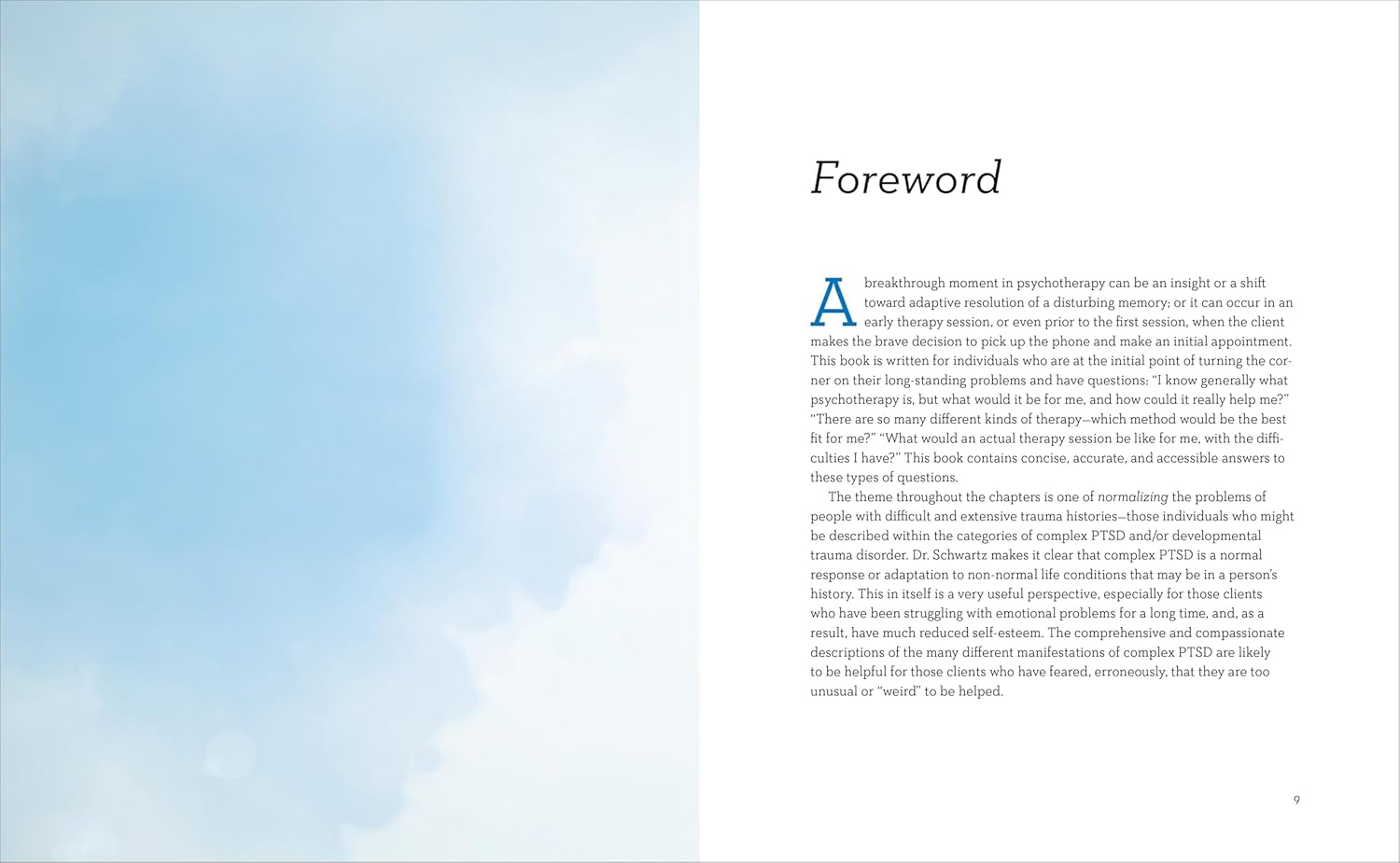
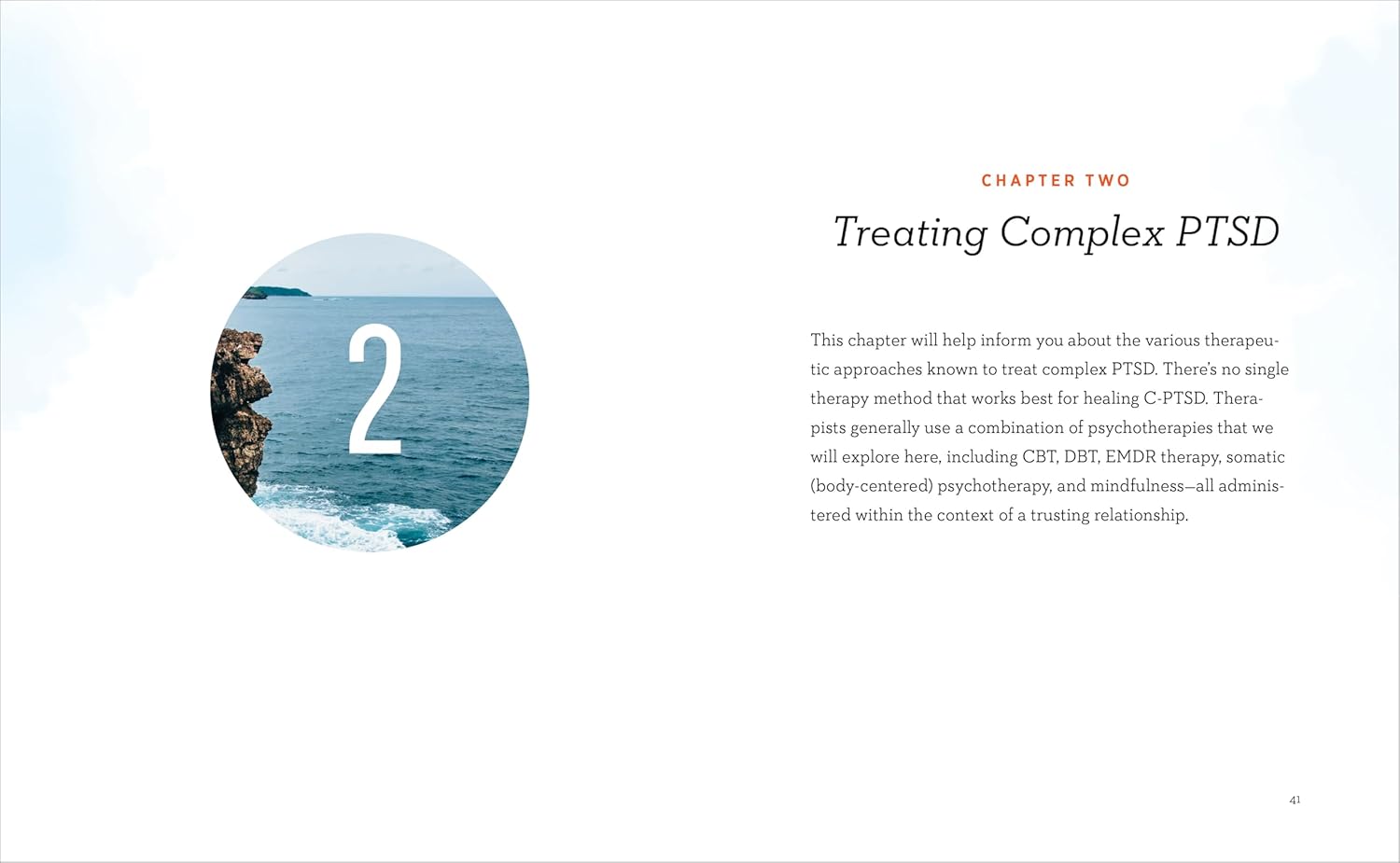
Dr. Schwartz’s book offers a golden thread of hope to help guide individuals through healing from childhood trauma. Individuals struggling with C-PTSD often have spent much of their lives shrouded in fear, isolation, anxiety, depression, and hopelessness. If I had to pick one key takeaway from this workbook, it would be validation. Through accessible education, affirmation, and gentle prompts toward self-exploration, Dr. Schwartz validates the often confusing and overwhelming experience of those that who have experienced childhood trauma and empowers them to take part in their healing. For the professional, Dr. Schwartz’s workbook could be considered a physical manifestation of the hope that we hold for our clients in their most troublesome of times. It is a guide that provides concrete information about the etiology, symptoms, possible barriers, and pathways to healing from C-PTSD. Dr. Schwartz’s warmth and compassion are evident in her writing, offering an extension of the healing relationship experienced in the therapist’s office.Aesthetically, this workbook is different from what you might expect from a self-help workbook. The cover has a lovely softness that invites you to hold it in your hands and just notice. The size of this workbook is smaller than the usual 8.5 x 11 where you might feel compelled to sit at a desk and “do your homework.” Rather, Dr. Schwartz’s book feels more like a book that you might curl up with on the couch, along with your favorite pen, to reflect at the end of chapters and note the passages that resonate with your experience. Each chapter begins with an image, a window into nature, a place of simple but profound beauty. Brief passages of wisdom and reassurance are easily accessible by just flipping through the book and noticing the orange text near your fingertips. Passages in blue text convey the real experiences of individuals healing from C-PTSD and thus, reminding the reader that they are not, in fact, alone.This workbook is empowering and a companion for individuals who have experienced childhood trauma, a comprehensive overview for those interested in understanding more about C-PTSD, and a valuable tool for professionals to share with their clients as they partner on the journey toward healing from C-PTSD.
Kaylah Geistlinger –
Great for the basics and revisit for tools to do at home
I love this book for the basics. I personally loved the 2nd phase because it teaches a good tool for facing and dealing with someone who might trigger a PTSD reaction or uncomfortable situation where we really do need to set a boundary and have a clear way for emotional regulation. I also loved how it defines resilience in phase 3. However what I didn’t like is that it doesn’t address tools for HSP like another book I’ve been listening to that can amplify triggers and need a balance of stimulation and relaxation. I feel like there can be even more advanced methods based on personality type and specific experiences such as “tricky families” that I learned from a social worker. There are 7 different family types that can contribute to cptsd . I’m hoping they make an updated version to accommodate personality types and different experiences contributing to cptsd. But its perfect for the basics and those who are not familiar with psychology and therapy, with the work they can do on their own.
Bethlehemer –
Great book!
This workbook is invaluable. I’d never felt so understood before. It’s been an asset to my time in therapy. I highly recommend this book or anybody struggling with CPTSD.
Amazon CustomerEileen s –
Highly recommended
Great book highly helpful
Eli –
The book gives a great introduction into the topic with all the necessary information to understand what’s going on in the mind and body of a traumatized person – which makes it both informative as well as feeling understood and interested to read on. I also like how well the book is organized, that’s written very straightforward and how the questions towards the end of each chapter help to connect and integrate the personal situation with the explained concepts and make sense of the individual trauma. Of course the book can’t go into great detail for all kinds of specific trauma that caused c-ptsd, but the general guideline offers a good framework to follow along. The highly specific details have to be discussed with a qualified therapist as it is rightfully stated many times in the book. I am still happy to have read this book. I learned a lot and it helped me to become more clear about my own situation in a lot of ways. A big thank you to the author and everyone involved in making this book! 🙏
Margaret callaghan –
Best book I have read about BPD. Very easy to understand, makes the disorder easier to understand
Tara Westbrook –
I am halfway through this book.I didn’t know what to expect at the start. It’s a very basic book, however, it does get you looking inwards and reflecting on your past and coping skills.I think if you’re at the start of your healing journey and are considering a therapist, this is a great book.
A. B. –
For someone like me who was born and raised in a country where science is lagging behind, and mental health professionals are extremely ignorant and invalidating, this book saved my life. This book, in the first 40 pages, helped me more than 5 years of therapy with professionals from the third world. I am amazed how this book made me understand that it is not my fault, and that I am not a freak. In the country where I live, CPTSD is not even classified as a mental illness, 99% of the professionals here don’t even know what that is. This book really opened my eyes to a new world for me: a world of validation, knowledge and hope. Now I see that there’s hope for me. Thank you.
Paul’s account –
Really helpful interaction with great information work with it and it’ll help